
Use cottage cheese (4% milkfat) and no-salt-added tomato sauce for the stated calculation. Pasta is weighed dry, spinach is weighed raw, and chicken is weighed after cooking. Divide the finished batch evenly between two portions. Cooking water adds no calories or macros.
🧀 Cottage cheese pasta with creamy tomato sauce
Makes 2 servings · About 20 minutes
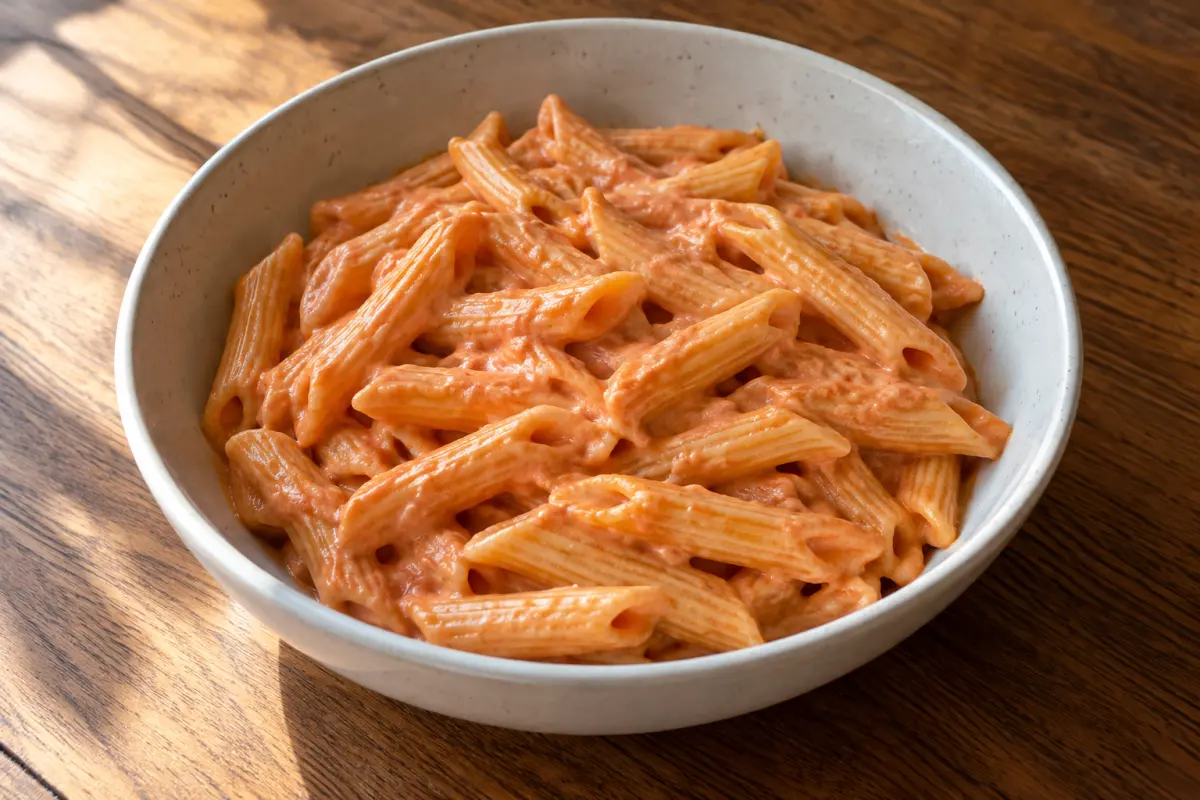
427 kcal25.3 g protein52.9 g carbs12.6 g fat
Ingredients for the whole batch
- 114 g dry pasta
- 300 g cottage cheese (4% milkfat)
- 200 g no-salt-added tomato sauce
- 10 g olive oil
Method
- Cook the dry pasta according to its package directions. Reserve a little cooking water, then drain.
- Blend the cottage cheese and tomato sauce until smooth. Warm the oil in a skillet, lower the heat and stir in the blended sauce just until warm. Avoid a hard boil.
- Fold in the pasta, loosening the sauce with reserved cooking water if needed. Divide the finished dish evenly between two bowls.
The base recipe uses regular dry enriched pasta and 4% milkfat cottage cheese.
Show the ingredient-by-ingredient macro calculation
| Ingredient per serving | Calories | Protein | Carbs | Fat |
|---|---|---|---|---|
| dry pasta57 g per serving | Calories211 kcal | Protein7.4 g | Carbs42.6 g | Fat0.9 g |
| cottage cheese (4% milkfat)150 g per serving | Calories147 kcal | Protein16.7 g | Carbs5.1 g | Fat6.5 g |
| no-salt-added tomato sauce100 g per serving | Calories24 kcal | Protein1.2 g | Carbs5.3 g | Fat0.3 g |
| olive oil5 g per serving | Calories44 kcal | Protein0 g | Carbs0 g | Fat5 g |
Batch total (2 servings): 853 kcal calories; 50.6 g protein; 105.9 g carbs; 25.2 g fat. Totals use the unrounded sum; display values are rounded.
Three ways to change the recipe
Each variation below starts from the base. The chicken and spinach additions are separate options; the protein-penne version replaces the pasta. Each has its own complete ingredient list and calculation.
🧀 Cottage cheese pasta with chicken
Makes 2 servings · About 20 minutes
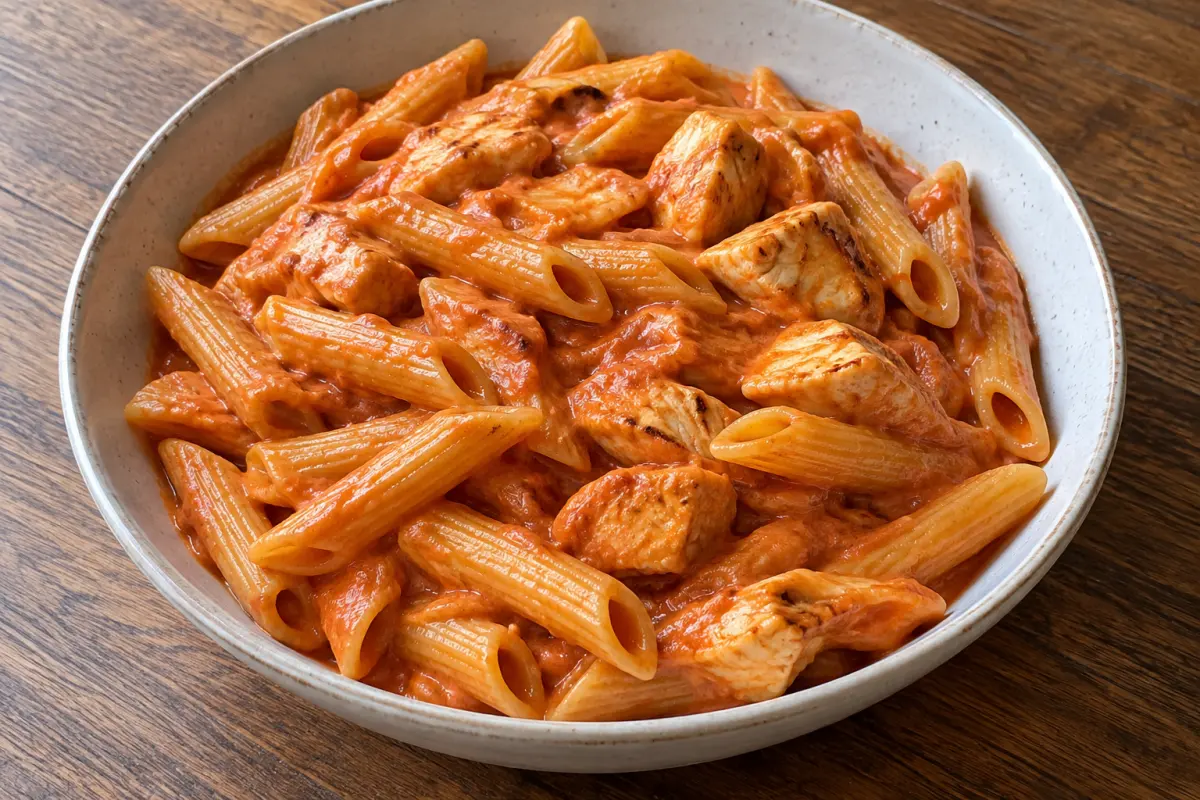
559 kcal50.1 g protein52.9 g carbs15.5 g fat
Ingredients for the whole batch
- 114 g dry pasta
- 300 g cottage cheese (4% milkfat)
- 200 g no-salt-added tomato sauce
- 10 g olive oil
- 160 g roasted skinless chicken breast (cooked weight)
Method
- Cook the dry pasta according to its package directions. Reserve a little cooking water, then drain.
- Blend the cottage cheese and tomato sauce until smooth. Warm the oil in a skillet and heat the diced cooked chicken through, then lower the heat and stir in the blended sauce just until warm. Avoid a hard boil.
- Fold in the pasta, loosening the sauce with reserved cooking water if needed. Divide the finished dish evenly between two bowls.
Add 160 g cooked skinless roasted chicken to the two-serving base; weigh the chicken after cooking.
Show the ingredient-by-ingredient macro calculation
| Ingredient per serving | Calories | Protein | Carbs | Fat |
|---|---|---|---|---|
| dry pasta57 g per serving | Calories211 kcal | Protein7.4 g | Carbs42.6 g | Fat0.9 g |
| cottage cheese (4% milkfat)150 g per serving | Calories147 kcal | Protein16.7 g | Carbs5.1 g | Fat6.5 g |
| no-salt-added tomato sauce100 g per serving | Calories24 kcal | Protein1.2 g | Carbs5.3 g | Fat0.3 g |
| olive oil5 g per serving | Calories44 kcal | Protein0 g | Carbs0 g | Fat5 g |
| roasted skinless chicken breast (cooked weight)80 g per serving | Calories132 kcal | Protein24.8 g | Carbs0 g | Fat2.9 g |
Batch total (2 servings): 1117 kcal calories; 100.3 g protein; 105.9 g carbs; 30.9 g fat. Totals use the unrounded sum; display values are rounded.
🧀 Cottage cheese pasta with spinach
Makes 2 servings · About 20 minutes
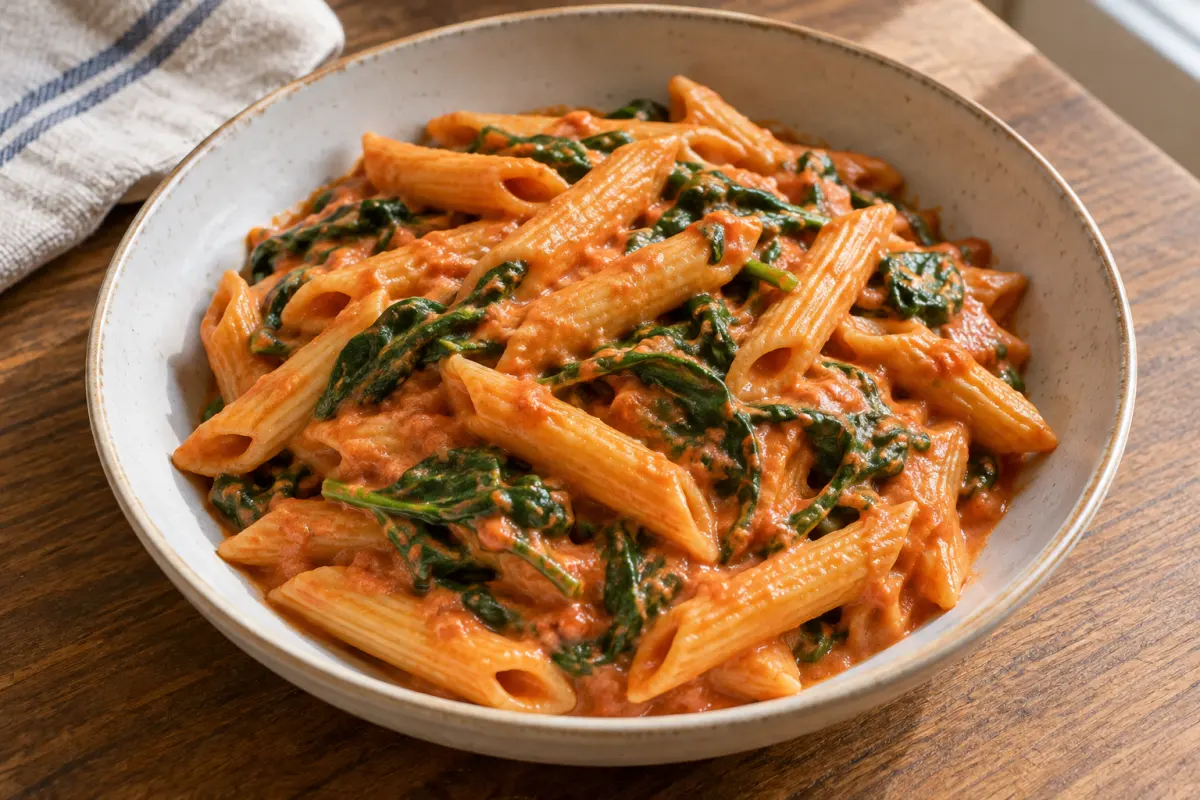
438 kcal26.7 g protein54.8 g carbs12.8 g fat
Ingredients for the whole batch
- 114 g dry pasta
- 300 g cottage cheese (4% milkfat)
- 200 g no-salt-added tomato sauce
- 10 g olive oil
- 100 g spinach
Method
- Cook the dry pasta according to its package directions. Reserve a little cooking water, then drain.
- Blend the cottage cheese and tomato sauce until smooth. Warm the oil in a skillet and wilt the spinach, then lower the heat and stir in the blended sauce just until warm. Avoid a hard boil.
- Fold in the pasta, loosening the sauce with reserved cooking water if needed. Divide the finished dish evenly between two bowls.
Add 100 g raw spinach to the two-serving base; its contribution is included in the totals.
Show the ingredient-by-ingredient macro calculation
| Ingredient per serving | Calories | Protein | Carbs | Fat |
|---|---|---|---|---|
| dry pasta57 g per serving | Calories211 kcal | Protein7.4 g | Carbs42.6 g | Fat0.9 g |
| cottage cheese (4% milkfat)150 g per serving | Calories147 kcal | Protein16.7 g | Carbs5.1 g | Fat6.5 g |
| no-salt-added tomato sauce100 g per serving | Calories24 kcal | Protein1.2 g | Carbs5.3 g | Fat0.3 g |
| olive oil5 g per serving | Calories44 kcal | Protein0 g | Carbs0 g | Fat5 g |
| spinach50 g per serving | Calories12 kcal | Protein1.4 g | Carbs1.8 g | Fat0.2 g |
Batch total (2 servings): 876 kcal calories; 53.5 g protein; 109.5 g carbs; 25.6 g fat. Totals use the unrounded sum; display values are rounded.
🧀 Cottage cheese pasta with protein penne
Makes 2 servings · About 20 minutes
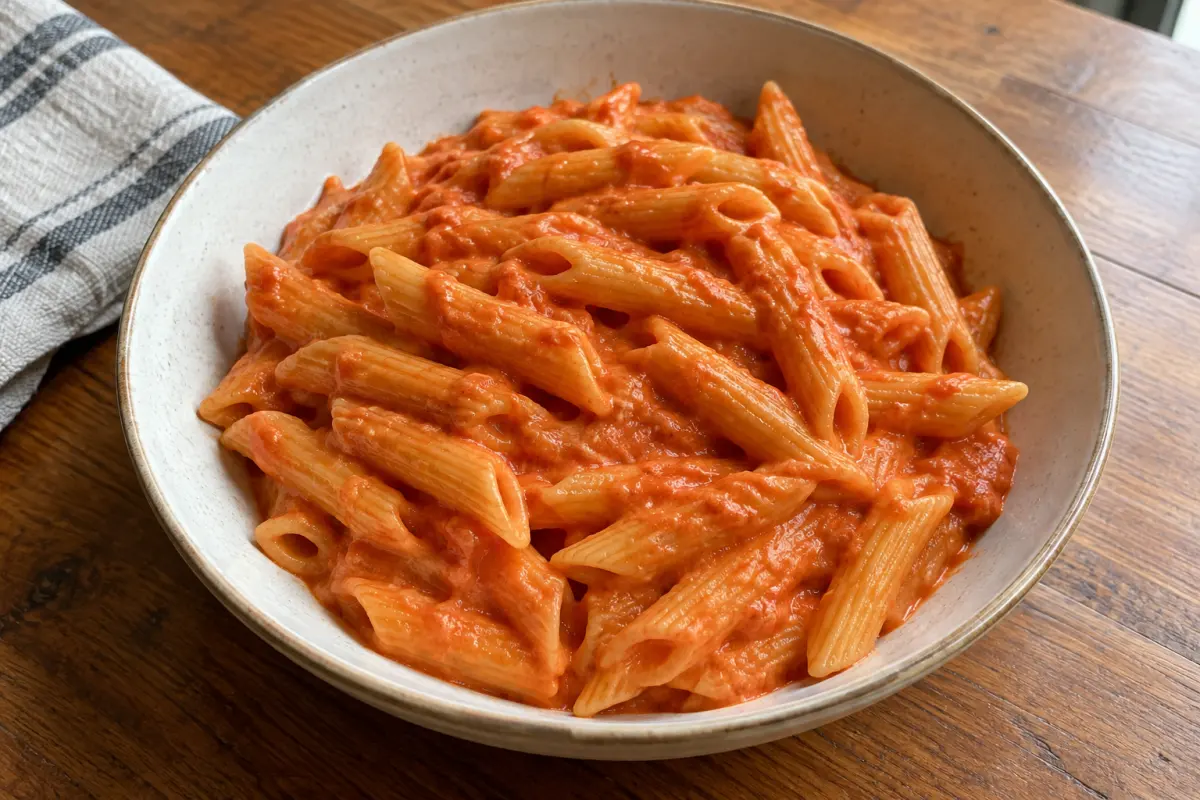
395 kcal28.9 g protein47.4 g carbs12.8 g fat
Ingredients for the whole batch
- 114 g GOODLES Lucky Penne (dry)
- 300 g cottage cheese (4% milkfat)
- 200 g no-salt-added tomato sauce
- 10 g olive oil
Method
- Cook the dry pasta according to its package directions. Reserve a little cooking water, then drain.
- Blend the cottage cheese and tomato sauce until smooth. Warm the oil in a skillet, lower the heat and stir in the blended sauce just until warm. Avoid a hard boil.
- Fold in the pasta, loosening the sauce with reserved cooking water if needed. Divide the finished dish evenly between two bowls.
This is a label-based example using GOODLES Lucky Penne: 114 g dry for two servings. Other protein pastas have different labels and will change the numbers.
Show the ingredient-by-ingredient macro calculation
| Ingredient per serving | Calories | Protein | Carbs | Fat |
|---|---|---|---|---|
| GOODLES Lucky Penne (dry)57 g per serving | Calories180 kcal | Protein11 g | Carbs37 g | Fat1 g |
| cottage cheese (4% milkfat)150 g per serving | Calories147 kcal | Protein16.7 g | Carbs5.1 g | Fat6.5 g |
| no-salt-added tomato sauce100 g per serving | Calories24 kcal | Protein1.2 g | Carbs5.3 g | Fat0.3 g |
| olive oil5 g per serving | Calories44 kcal | Protein0 g | Carbs0 g | Fat5 g |
Batch total (2 servings): 790 kcal calories; 57.8 g protein; 94.8 g carbs; 25.5 g fat. Totals use the unrounded sum; display values are rounded.
How the nutrition is calculated
For each USDA ingredient, multiply grams used by its nutrient value per 100 g and divide by 100. For the protein-penne variation, multiply dry grams by the official label values and divide by its 57 g serving. Add every ingredient, then divide by two servings. The ingredient tables show each contribution.
These are calculated estimates, not laboratory measurements of the finished dishes. Source energy values are used directly; calories are not reconstructed from rounded macros. Values are rounded only for display. Different products, added toppings and unequal portions change the totals.
Compare noodle choices on our protein pasta data page and bowl calculator, or explore more protein pasta recipes.
Common questions about cottage cheese pasta
How do you make a smooth cottage cheese pasta sauce?
Blend the cottage cheese and tomato sauce until smooth before warming them gently in the skillet. Use a splash of reserved pasta water to loosen the sauce. Avoid a hard boil; the method is intended to keep the dairy sauce smooth.
How much protein is in cottage cheese pasta?
The two-serving base recipe provides 25.3 g protein and 427 calories per serving, calculated from the listed USDA ingredients. Adding chicken or changing the pasta changes the totals; each variation has its own calculation below.
Can I use low-fat cottage cheese?
Yes, but these calculations use regular 4% milkfat cottage cheese. Use the nutrition values and amount from your own product to recalculate the meal. A different milkfat percentage or brand changes the numbers.
Is this cottage cheese pasta gluten free?
The base uses enriched wheat pasta and contains gluten. The protein-penne variation also uses wheat. If you need a gluten-free version, choose a labeled gluten-free pasta, check every other ingredient and recalculate the macros using that package.
Sources and calculation notes
USDA SR Legacy records from the April 2018 dataset. Calculations use unrounded source values, with rounding only for display.
- GOODLES Lucky Penne: official US label, retrieved October 27, 2026. 2 oz dry (57 g). Wheat pasta with chickpea and wheat protein.
- USDA FoodData Central: original SR Legacy dataset. FDC 169736; FDC 172179; FDC 169074; FDC 171413; FDC 171477; FDC 168462.
Product labels can change; check your package. Product names are trademarks of their owners, with no affiliation or endorsement implied.
General nutrition information, not medical advice. These recipes have not been reviewed by a registered dietitian. Check ingredients for your allergies and dietary restrictions.