
How to make high protein pasta and sauce
- Choose a higher-protein noodle. Swap in a higher-protein pasta if you prefer; labels vary by product. Start with the pasta comparison table. A higher-protein pasta can add protein to the meal; use the bowl calculator to work out your own swap.
- Add a protein ingredient. Use cooked chicken, lean ground beef, shrimp or firm tofu. Weigh the ingredient in the state named in the list.
- Use a high protein pasta sauce. Blend cottage cheese with tomato sauce, or mix Greek yogurt into a cold salad dressing. Include the sauce in the calculation.
Each full recipe makes two servings using 114 g of regular dry pasta.
Seven simple high protein pasta recipes
🍗 Chicken and spinach penne
Makes 2 servings · About 20 minutes
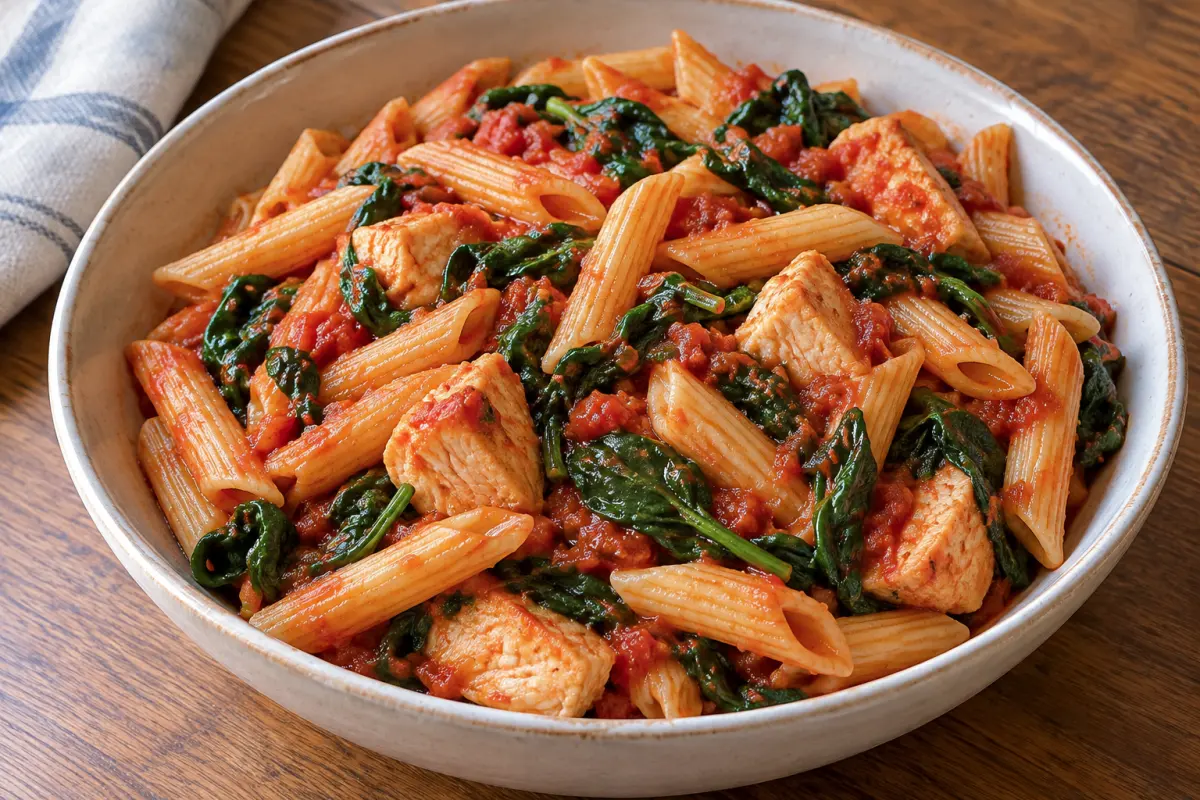
461 kcal41.3 g protein50.7 g carbs10 g fat
Ingredients for the whole batch
- 114 g dry pasta
- 200 g roasted skinless chicken breast (cooked weight)
- 100 g spinach
- 240 g no-salt-added tomato sauce
- 10 g olive oil
Method
- Boil the penne according to its package directions; drain, keeping a little cooking water.
- Warm the oil in a skillet. Add the spinach and stir until wilted, then add the tomato sauce and diced cooked chicken. Heat until steaming throughout.
- Fold in the pasta. Add a splash of the reserved water if needed, then divide evenly between two bowls.
Use leftover roasted chicken weighed after cooking; the listed weight excludes skin and bones.
Show the ingredient-by-ingredient macro calculation
| Ingredient per serving | Calories | Protein | Carbs | Fat |
|---|---|---|---|---|
| dry pasta57 g per serving | Calories211 kcal | Protein7.4 g | Carbs42.6 g | Fat0.9 g |
| roasted skinless chicken breast (cooked weight)100 g per serving | Calories165 kcal | Protein31 g | Carbs0 g | Fat3.6 g |
| spinach50 g per serving | Calories12 kcal | Protein1.4 g | Carbs1.8 g | Fat0.2 g |
| no-salt-added tomato sauce120 g per serving | Calories29 kcal | Protein1.4 g | Carbs6.4 g | Fat0.4 g |
| olive oil5 g per serving | Calories44 kcal | Protein0 g | Carbs0 g | Fat5 g |
Batch total (2 servings): 922 kcal calories; 82.6 g protein; 101.5 g carbs; 20 g fat. Totals use the unrounded sum; display values are rounded.
🥩 Ground beef tomato pasta
Makes 2 servings · About 20 minutes
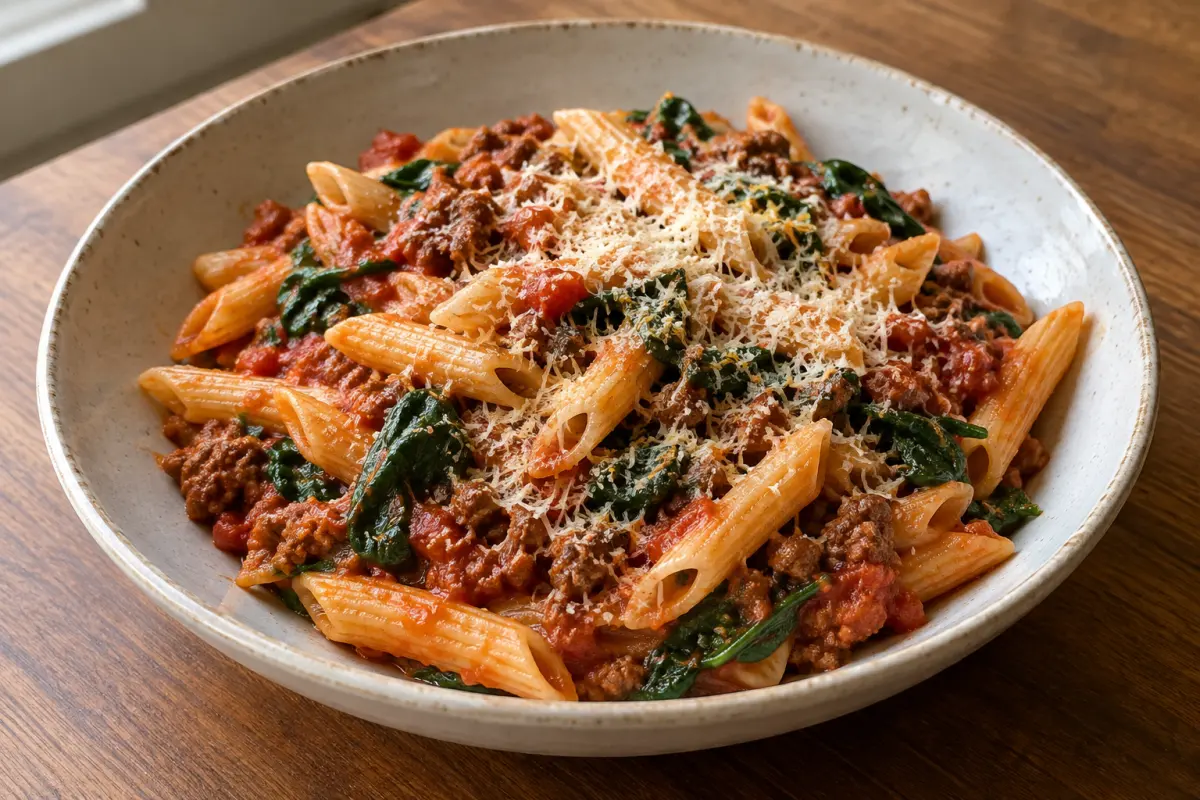
472 kcal39.5 g protein53.4 g carbs11.1 g fat
Ingredients for the whole batch
- 114 g dry pasta
- 180 g 95% lean ground beef (cooked weight)
- 300 g no-salt-added tomato sauce
- 80 g spinach
- 20 g grated Parmesan
Method
- Cook and drain the penne according to its package directions.
- Warm the cooked ground beef and tomato sauce in a nonstick skillet with a splash of water. Stir in the spinach until wilted and heat everything through.
- Toss with the pasta, divide into two portions and sprinkle each with half the Parmesan.
The calculation uses cooked 95% lean beef. Brown and drain beef first if starting with raw meat, then weigh 180 g.
Show the ingredient-by-ingredient macro calculation
| Ingredient per serving | Calories | Protein | Carbs | Fat |
|---|---|---|---|---|
| dry pasta57 g per serving | Calories211 kcal | Protein7.4 g | Carbs42.6 g | Fat0.9 g |
| 95% lean ground beef (cooked weight)90 g per serving | Calories174 kcal | Protein26.3 g | Carbs0 g | Fat6.8 g |
| no-salt-added tomato sauce150 g per serving | Calories36 kcal | Protein1.8 g | Carbs8 g | Fat0.5 g |
| spinach40 g per serving | Calories9 kcal | Protein1.1 g | Carbs1.5 g | Fat0.2 g |
| grated Parmesan10 g per serving | Calories42 kcal | Protein2.8 g | Carbs1.4 g | Fat2.8 g |
Batch total (2 servings): 945 kcal calories; 78.9 g protein; 106.7 g carbs; 22.1 g fat. Totals use the unrounded sum; display values are rounded.
🧀 Creamy tomato pasta
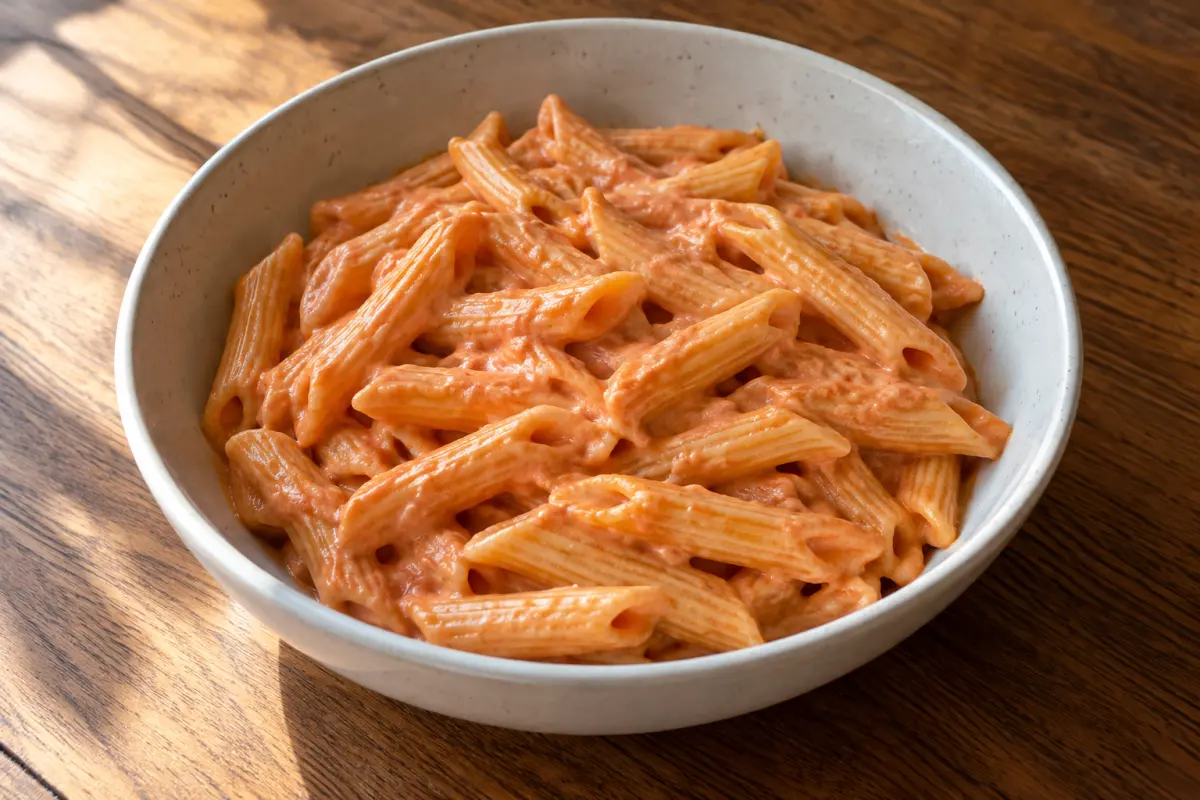
Blend cottage cheese into a tomato sauce for a creamy pasta bowl. Our dedicated recipe includes the full ingredient amounts, calculated macros, and chicken, spinach and protein-penne variations.
🍤 Lemon shrimp and spinach pasta
Makes 2 servings · About 15 minutes
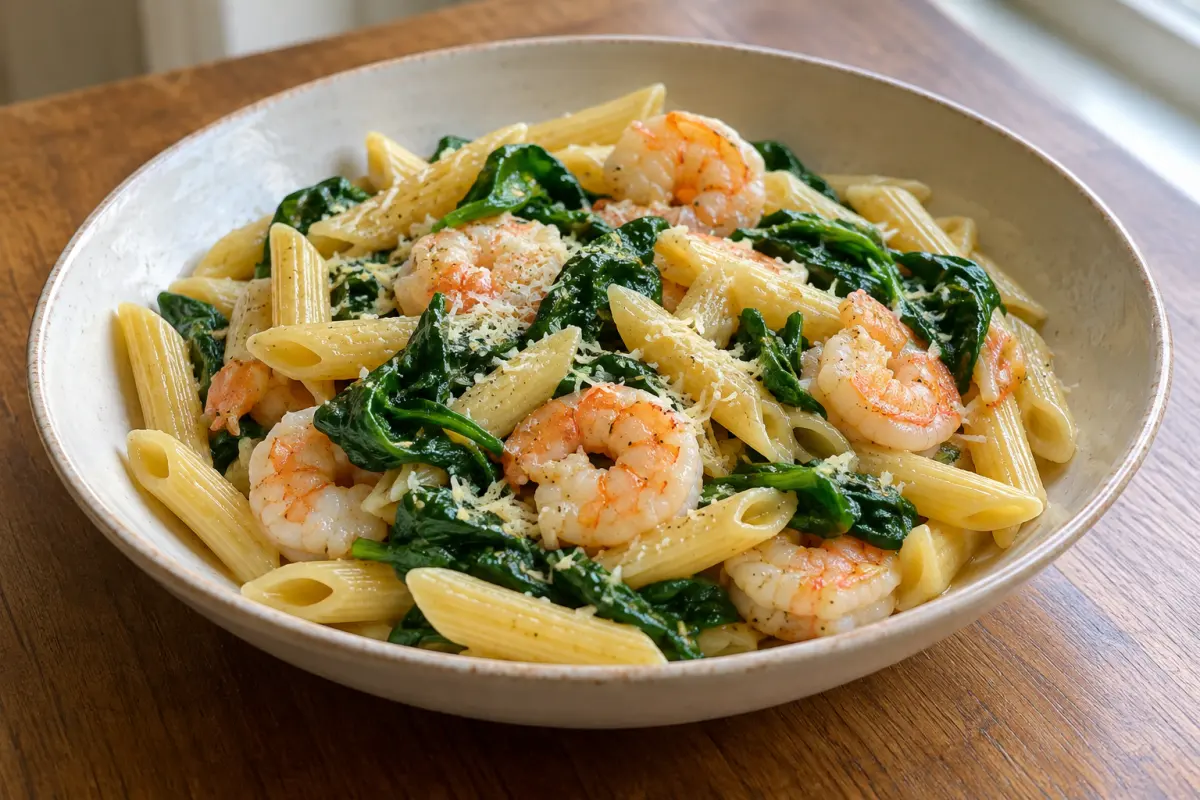
473 kcal39.1 g protein48.6 g carbs12.9 g fat
Ingredients for the whole batch
- 114 g dry pasta
- 240 g peeled cooked shrimp
- 100 g spinach
- 30 g lemon juice
- 14 g olive oil
- 20 g grated Parmesan
Method
- Cook and drain the penne, saving a little cooking water.
- Warm the oil in a skillet and wilt the spinach. Add the peeled cooked shrimp and heat through gently.
- Add the pasta, lemon juice, Parmesan and a splash of pasta water. Toss and divide evenly.
Weigh the cooked shrimp after removing shells and tails. These totals include all 14 g of oil.
Show the ingredient-by-ingredient macro calculation
| Ingredient per serving | Calories | Protein | Carbs | Fat |
|---|---|---|---|---|
| dry pasta57 g per serving | Calories211 kcal | Protein7.4 g | Carbs42.6 g | Fat0.9 g |
| peeled cooked shrimp120 g per serving | Calories143 kcal | Protein27.3 g | Carbs1.8 g | Fat2 g |
| spinach50 g per serving | Calories12 kcal | Protein1.4 g | Carbs1.8 g | Fat0.2 g |
| lemon juice15 g per serving | Calories3 kcal | Protein0.1 g | Carbs1 g | Fat0 g |
| olive oil7 g per serving | Calories62 kcal | Protein0 g | Carbs0 g | Fat7 g |
| grated Parmesan10 g per serving | Calories42 kcal | Protein2.8 g | Carbs1.4 g | Fat2.8 g |
Batch total (2 servings): 946 kcal calories; 78.2 g protein; 97.3 g carbs; 25.8 g fat. Totals use the unrounded sum; display values are rounded.
🌱 Vegetarian tofu tomato penne
Makes 2 servings · About 20 minutes
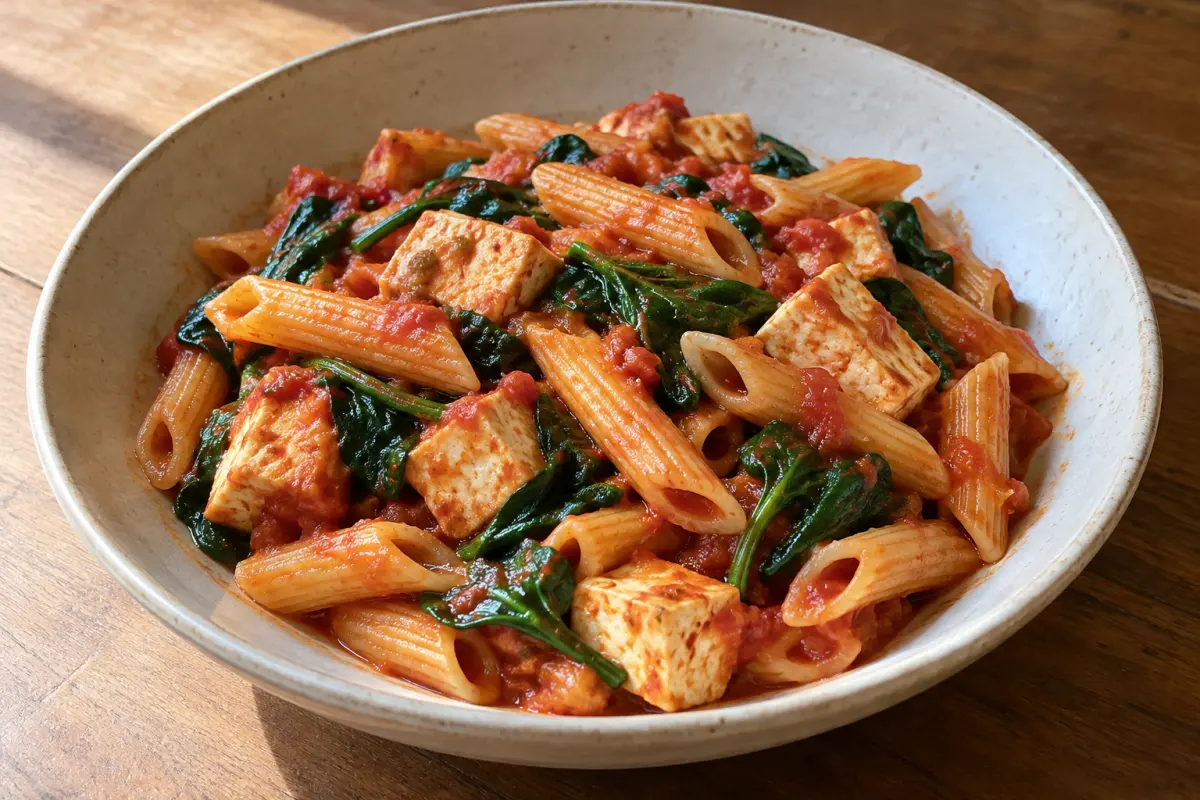
519 kcal36.6 g protein56.5 g carbs19.6 g fat
Ingredients for the whole batch
- 114 g dry pasta
- 300 g firm tofu
- 300 g no-salt-added tomato sauce
- 100 g spinach
- 10 g olive oil
Method
- Cook and drain the penne according to its package directions.
- Drain the tofu, blot dry and cut into small cubes. Warm the oil in a nonstick skillet and cook the tofu for about 5 minutes, turning gently.
- Add the sauce and spinach, simmer until the spinach wilts and the tofu is hot, then toss with the pasta and divide evenly.
The USDA record is firm tofu made with calcium sulfate; softer tofu and other brands can have very different macros.
Show the ingredient-by-ingredient macro calculation
| Ingredient per serving | Calories | Protein | Carbs | Fat |
|---|---|---|---|---|
| dry pasta57 g per serving | Calories211 kcal | Protein7.4 g | Carbs42.6 g | Fat0.9 g |
| firm tofu150 g per serving | Calories216 kcal | Protein25.9 g | Carbs4.2 g | Fat13.1 g |
| no-salt-added tomato sauce150 g per serving | Calories36 kcal | Protein1.8 g | Carbs8 g | Fat0.5 g |
| spinach50 g per serving | Calories12 kcal | Protein1.4 g | Carbs1.8 g | Fat0.2 g |
| olive oil5 g per serving | Calories44 kcal | Protein0 g | Carbs0 g | Fat5 g |
Batch total (2 servings): 1038 kcal calories; 73.1 g protein; 113 g carbs; 39.2 g fat. Totals use the unrounded sum; display values are rounded.
🥗 High protein pasta salad with chicken
Makes 2 servings · About 20 minutes
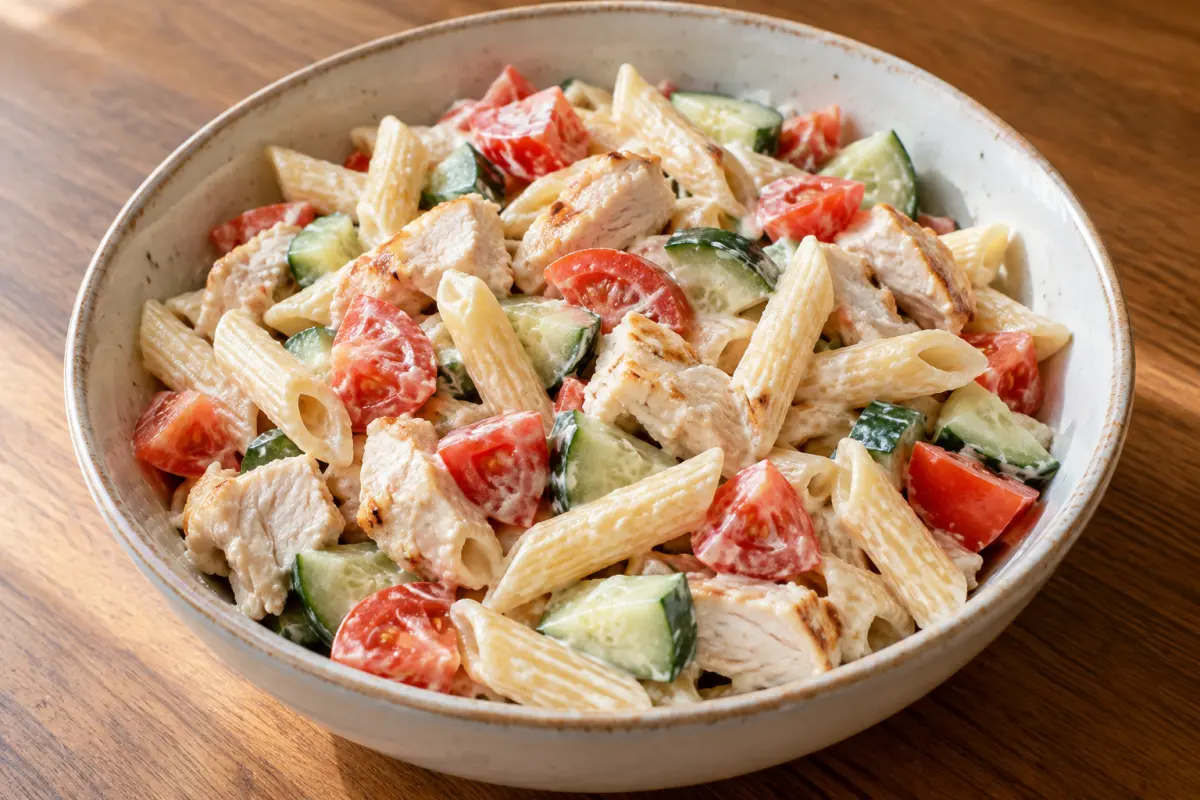
480 kcal43.9 g protein54 g carbs9.4 g fat
Ingredients for the whole batch
- 114 g dry pasta
- 160 g roasted skinless chicken breast (cooked weight)
- 200 g plain nonfat Greek yogurt
- 160 g cucumber with peel
- 200 g tomato
- 30 g lemon juice
- 10 g olive oil
Method
- Cook the penne according to its package directions, rinse briefly under cool water and drain well.
- Whisk the Greek yogurt, lemon juice and oil. Dice the cooked chicken, cucumber and tomato.
- Toss everything together and divide into two portions. Serve right away or refrigerate promptly.
This is a cold pasta salad with a yogurt dressing. Keep the chicken and yogurt chilled until assembling.
Show the ingredient-by-ingredient macro calculation
| Ingredient per serving | Calories | Protein | Carbs | Fat |
|---|---|---|---|---|
| dry pasta57 g per serving | Calories211 kcal | Protein7.4 g | Carbs42.6 g | Fat0.9 g |
| roasted skinless chicken breast (cooked weight)80 g per serving | Calories132 kcal | Protein24.8 g | Carbs0 g | Fat2.9 g |
| plain nonfat Greek yogurt100 g per serving | Calories59 kcal | Protein10.2 g | Carbs3.6 g | Fat0.4 g |
| cucumber with peel80 g per serving | Calories12 kcal | Protein0.5 g | Carbs2.9 g | Fat0.1 g |
| tomato100 g per serving | Calories18 kcal | Protein0.9 g | Carbs3.9 g | Fat0.2 g |
| lemon juice15 g per serving | Calories3 kcal | Protein0.1 g | Carbs1 g | Fat0 g |
| olive oil5 g per serving | Calories44 kcal | Protein0 g | Carbs0 g | Fat5 g |
Batch total (2 servings): 960 kcal calories; 87.8 g protein; 108 g carbs; 18.9 g fat. Totals use the unrounded sum; display values are rounded.
🍱 Chicken cottage cheese pasta bake
Makes 2 servings · About 30 minutes
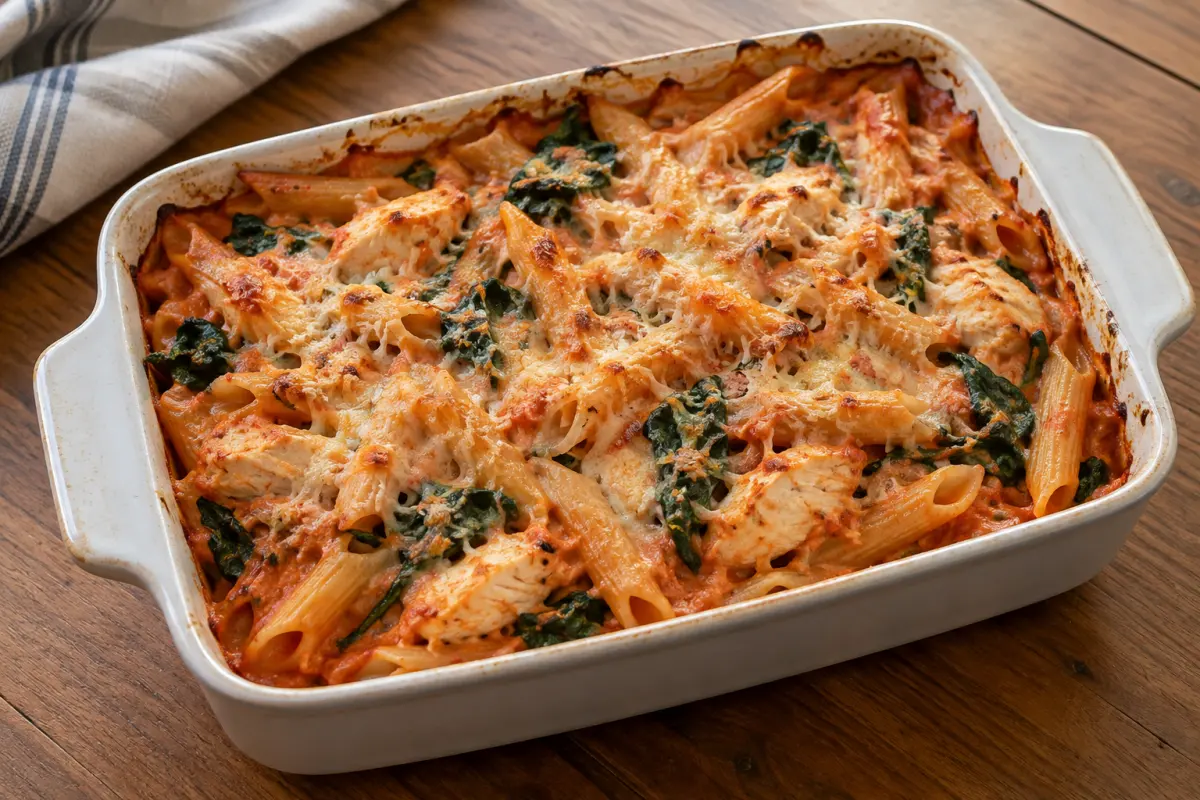
552 kcal50.9 g protein57.8 g carbs12.8 g fat
Ingredients for the whole batch
- 114 g dry pasta
- 160 g roasted skinless chicken breast (cooked weight)
- 200 g cottage cheese (4% milkfat)
- 300 g no-salt-added tomato sauce
- 100 g spinach
- 30 g grated Parmesan
Method
- Heat the oven to 375°F. Cook the penne just short of its package time and drain.
- Blend the cottage cheese with the tomato sauce. Stir in the cooked diced chicken, raw spinach and drained pasta.
- Transfer to a small nonstick baking dish, top with the Parmesan and bake for about 15–20 minutes until hot throughout. Divide into two equal portions.
For high protein pasta meal prep, portion the bake after cooking. The batch calculation includes every ingredient listed; use the same ingredients and split the finished batch evenly.
Show the ingredient-by-ingredient macro calculation
| Ingredient per serving | Calories | Protein | Carbs | Fat |
|---|---|---|---|---|
| dry pasta57 g per serving | Calories211 kcal | Protein7.4 g | Carbs42.6 g | Fat0.9 g |
| roasted skinless chicken breast (cooked weight)80 g per serving | Calories132 kcal | Protein24.8 g | Carbs0 g | Fat2.9 g |
| cottage cheese (4% milkfat)100 g per serving | Calories98 kcal | Protein11.1 g | Carbs3.4 g | Fat4.3 g |
| no-salt-added tomato sauce150 g per serving | Calories36 kcal | Protein1.8 g | Carbs8 g | Fat0.5 g |
| spinach50 g per serving | Calories12 kcal | Protein1.4 g | Carbs1.8 g | Fat0.2 g |
| grated Parmesan15 g per serving | Calories63 kcal | Protein4.3 g | Carbs2.1 g | Fat4.2 g |
Batch total (2 servings): 1104 kcal calories; 101.7 g protein; 115.6 g carbs; 25.7 g fat. Totals use the unrounded sum; display values are rounded.
High protein pasta bake and meal prep
The chicken cottage cheese bake above makes two portions. For four portions, double every ingredient and divide the finished batch into four equal meals; the calculated macros per serving stay the same. Keep the salad cold, refrigerate finished meals promptly and reheat cooked dishes thoroughly. Storage and reheating needs depend on the ingredients and your kitchen conditions.
For the cold high protein pasta salad, keep the yogurt dressing separate if you prefer to mix it just before serving. Different brands, additional dressing or a larger portion change the totals.
How we calculate each recipe’s macros
For each ingredient: grams used ÷ 100 × its USDA nutrient value per 100 g, including the dry pasta. Add every ingredient, then divide by two servings. Calories use the source’s energy value; we do not replace it with a 4/4/9 estimate from rounded macros.
These are calculated estimates, not laboratory measurements of the finished recipes. Values are rounded only after calculation. Water uptake, moisture loss, ingredient brands and the size of your actual portion affect the result. Pasta is weighed dry, vegetables raw, and meat and shrimp after cooking. Weigh the whole batch and divide it evenly; times assume cooked meat or shrimp is ready. Cooking water adds no calories or macros. Each ingredient links to its USDA record; the expandable tables show its contribution.
Common questions
Can I use a different high protein pasta recipe base?
Yes. Use your package serving weight and replace the pasta contribution in the calculation. The six full recipes use 114 g of regular dry pasta per two-serving batch, with USDA values. A protein-pasta swap changes the calories and macros; use the linked bowl calculator with your own pasta choice and ingredients.
Are these high protein pasta recipes for weight loss?
They are portioned meal ideas with calculated macros, not weight-loss prescriptions. Whether a meal fits your plan depends on the portion and your total intake. Include any extra oil, cheese or sides when logging the meal.
Sources and calculation notes
USDA SR Legacy records from the April 2018 dataset. Calculations use unrounded source values, with rounding only for display.
General nutrition information, not medical advice. Check ingredients for your allergies or dietary restrictions. These recipes have not been reviewed by a registered dietitian.